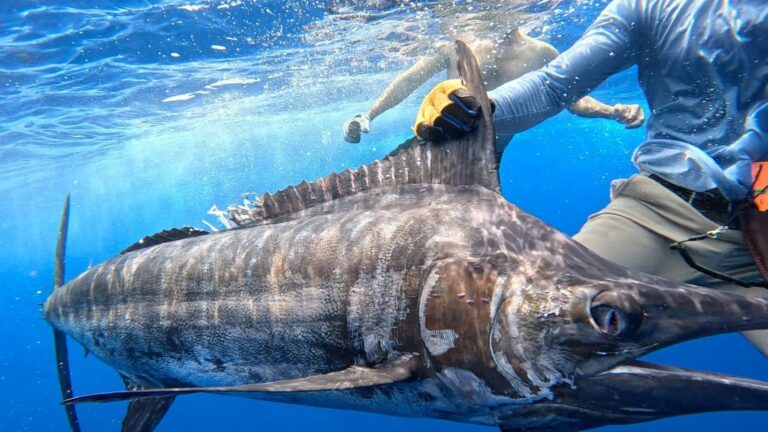


Atlantic cod (Gadus morhua) has long been considered Europe’s most commonplace fish: it’s fried in English pubs, salted in Lisbon’s markets, and served in college cafeterias, without much thought given to where it comes from. But every winter, some of this cod becomes a prized catch, drawing anglers from all over the world to travel beyond the Arctic Circle to fish for skrei in Norway.
The largest cod ever caught on a fishing rod weighed 47 kg and took the bait off the island of Søreya in Finnmark. The 2026 world champion, however, won the competition in Lofoten with a 15.4-kg fish—a third of that weight. As it turns out, cod aren’t at all required to swim to where the competitions are held.
We’ve figured out what a skrei is, where and when to look for it in 2027, what gear to bring, and what has changed in Norwegian regulations—so your fishing trip ends with a trophy catch rather than just a stroll along the fjord.

What is skrei?
Skrei is not a separate species of fish, but rather Atlantic cod from the northeastern Arctic stock at the time when it migrates to spawn. This stock is the largest in the world: adult fish feed in the Barents Sea and, in winter, migrate to the coast of Norway to spawn.
Hence the name, which traces back to the Old Norse word *skreið*, meaning “to march, to move forward.” The journey is quite impressive: more than a thousand kilometers, and if the cod encounters areas rich in food along the way, it lingers there to feed.
Skrei now reach spawning age for the first time at around seven years old, although in the late 1940s this age was about ten. Decades of commercial fishing have depleted the population of the slowest-maturing fish, and the stock has become younger. In the spring of 2026, the spawning stock consisted mainly of 8- to 10-year-old fish about 90 cm long, while the largest individuals grow up to 1.8 m and 55 kg. Coastal cod, which lives off the Norwegian coast year-round, is noticeably smaller and even genetically distinct from its migratory relative.
Skrei also has its own quality standard. Only sexually mature fish weighing at least 2 kg—without the head or entrails—caught between January 1 and April 30 are eligible for the Skrei label. It must be bled while still alive and packaged no later than 12 hours after being caught, and the “skrei patrol”—a team of inspectors from the fishing cooperative—monitors the entire process. The standard is thought out down to the smallest detail: it even includes a separate line for cod tongues.

The Fish That Built Norway
The history of Norway’s wealth began not with oil, but with dried cod. According to the Saga of Egil, as early as 870, a Norwegian named Thorolv loaded a ship with dried fish in Lofoten and sold the cargo at a profit in England.
Around 1100, Vogar—the first town in Northern Norway—grew up around the fishing grounds, and a decree issued by the co-ruling kings, including Eystein, established a tax of five fish per fisherman. According to local legend, it was also during Eystein’s reign, around 1120, that the first rorbu—fishermen’s huts on stilts right at the water’s edge—appeared. Today, guests at fishing lodges stay in these huts, so in nine hundred years, the only thing that has changed is probably the mattresses.
From the 14th century onward, the cod trade was controlled by Hanseatic merchants from Bergen, and by the 1560s, about two hundred cargo ships loaded with fish, blubber, and roe were sailing south each year. In 1432, the shipwrecked Venetian captain Pietro Querini was washed ashore on the island of Röst, and tradition credits him with introducing dried cod into Venetian cuisine.
By the end of the 19th century, about 30,000 fishermen were gathering in the Lofoten Islands every winter. In 1898, a church with a capacity of 1,200 was built for them; it is still known today as the “Lofoten Cathedral.”
And in 1890, the most famous brawl in the history of Norwegian fishing took place here: steamship operators blocked Trollfjord—where the saithe had entered—with a net and demanded an entrance fee from the fishermen. Several thousand people in rowboats broke through the barrier, even as the steamships hosed them down with water. A year later, Parliament amended the fishing law in favor of the fishermen.

When to Go Snowboarding: The Seasonal Calendar
For centuries, the Lofoten Islands were the main gathering place for cod: up to half of the entire spawning stock used to come there. But in recent years, the fish have shifted noticeably northward, toward Vesterålen, Senja, Tromsø, and Finnmark, and Norwegian authorities attribute this to warming waters.
The 2026 season confirmed the trend. By the end of April, fishermen had landed 73,000 metric tons of cod, compared with 84,000 metric tons a year earlier, with catches declining in Lofoten, Vesterålen, and Troms, while Western Finnmark nearly maintained last year’s level. A scientific survey in the spring of 2026 counted about 70,000 metric tons of mature cod, twice as much as the previous year, but only 4% of the record set in 2014, and the fish did not use the traditional spawning grounds in Vestfjord that year.
Where to look for skrei in 2027:
- Søreya, West Finnmark. The northern boundary of the spawning grounds and the island where the world record was set. Skrei arrive here along with capelin, followed by whales. The season begins in March.
- The area around Tromsø. The fishing bases are a half-hour drive from the airport, from where a speedboat takes you out to the Malangsgrunn shoal and the fjords of Ringvassøy, where fishing for skrei in March and April is gaining popularity.
- Senya. In early spring, the skrei enter the island’s fjords, where they are caught both from chartered boats and from yachts with a skipper.
- Vesterolen. The outer coast receives the fish that have left the Lofoten Islands.
- Lofoten Islands. History, museums, the World Championship, and fishing in Vestfjord during the years when the fish run there.
Where to Go for Snowboarding in 2027
If the flight schedule isn’t convenient, you can book a charter flight. Both Air Seychelles and Zil Air offer private planes for small groups; Zil Air, for example, has a small Tecnam Traveller. This type of plane flies whenever you need it to.
But the most enjoyable way to travel around the Seychelles is by water. If you rent a yacht, traveling between the islands becomes a vacation in itself. You decide which cove to anchor in, which deserted beach to spend the day on, and when to set sail again.
Catamarans are particularly popular here for this reason. They have a shallow draft, so they can enter shallow coves, and their wide stern makes it easy to jump right into the sea. For short trips to nearby islands, a speedboat will suffice, but if you want to see several islands in one go, you should check out the boat cruises.

Records: Why All Roads Lead to Sereya
World record: 47 kg and 160 cm long. The cod was caught by German angler Michael Eisele on April 28, 2013, in Brevikfjord on Sørøya.
The fish took a 375-gram silicone lure that was drifting 20–25 meters above the bottom at a depth of about 90 meters. It took 36 minutes to land the cod, and it took three people to haul it into the boat. Eisele broke the previous Norwegian record by more than five kilograms, while the world record—44.8 kg from New Hampshire—had stood for 44 years. That same week, his party caught 33 cod weighing more than 30 kg off Sørøya.
By that time, the record-holder had been traveling to Norway to fish for a quarter of a century, and back home in Germany, he and his father manufactured saltwater fishing gear. A case of “professional deformation” in the best sense of the word.
Söröya is setting records in other categories as well. In 2016, Swedish angler Marika Eriksson caught a 38-kg cod here—the heaviest caught by a woman in 46 years. The island also holds the Norwegian record for fly-fishing cod.
To put this into perspective: the largest cod in history weighed about 96 kg and was caught on a longline off the coast of Massachusetts in 1895.

World Championship in Svolvær
Since 1991, the town of Svolvær in the Lofoten Islands has hosted the World Skrei Fishing Championship every March. The first year, 200 enthusiasts signed up, and in the best years, about 600 participants set out to sea in 80 boats. The next championship will take place on March 19–20, 2027.
The competition lasts two days. On Friday, they compete for the “Lofoten Cup,” where any fish counts toward the total, and on Saturday, the championship itself takes place, with only haddock counting toward the total.
At 9:00 a.m., the Coast Guard gives the starting signal, and each participant has five hours to fish with a single rod without electric reels. The organizers recommend jig lures weighing 300–500 g, allow participants to use their own bait, and strictly prohibit alcohol on the water. Any fish that a participant does not keep goes to the organizer.
Any tourist can participate. In 2026, the “Lofoten Cup” cost 1,400 NOK (127 €), the championship 1,675 NOK (152 €), and both days combined 2,699 NOK (245 €). Tourists usually win, simply because they make up the majority of participants on the water.
The championship record is 32.2 kg.
In 2026, the championship took place in strong winds, and out of 414 participants, only 40 submitted fish for weighing. The skrei also played a role, as it bypassed the Westfjord that year. Even if you’re fishing further north, it’s worth stopping by Svolvær at least as a spectator, because the Saturday weigh-in brings the whole town together.

How to Catch Skrei: Gear, Techniques, and Clothing
Skrei are reluctant to take bait, so they are mainly caught using large silicone lures and pilkers. Experienced anglers use silicone lures weighing up to 700 g or more, because larger lures tend to attract larger fish, and they keep pilkers on hand for when the current slows down and the bite dies off.
What you’ll need:
- A 20–30 lb. class rod. Heavier rods lose sensitivity, and fish are more likely to come off the hook, but in strong currents and at great depths, rods up to 30–50 lb. are used.
- A reel—either a multiplier reel or a non-inertia reel—with a drag setting of 15 kg or more.
- Braided line, 60–80 lb, with colored depth markings. This is the most important part of the entire rig.
- Tackle with an enormous safety margin: experienced anglers have seen a screer snap guide rings rated for 200 lb.
Markings on the line are necessary because the sculpin often doesn’t stay right at the bottom, but in the water column above it. It usually spawns at a depth of 40–100 m, and the largest fish are found in the upper part of the school: the fish finder shows the depth, and the lure is lowered precisely to that spot by counting the colors on the line.
If you plan to release the fish, reel it in slowly. When the cod nears the surface, stop reeling and wait for the pressure in its swim bladder to equalize. It’s easy to tell when it’s ready: the fish releases a stream of bubbles and starts thrashing its tail again. And for the dinner table, it’s best to keep fish weighing 4.5–9 kg, because the meat of the giants is noticeably coarser.
When going winter fishing, you should dress in layers: merino wool base layers, several warm layers on top, and a floatation suit that protects against the wind and keeps you afloat. Wear three pairs of socks—ranging from thin to thermal—and waterproof shoes without spikes: many boats at the fishing bases are made of aluminum, and spikes are prohibited on them. Many bases offering winter programs provide warm clothing themselves.

Rules for Sea Fishing for Skrei in Norway in 2027
Tourists in Norway do not need a separate license for sea fishing, but they may only fish with hand gear—no nets or longlines. The most significant changes concern the export of catch. Starting January 1, 2027, tourists may take no more than 10 kg of fish out of the country and no more than twice a year, although as recently as 2025, the limit was 18 kg. Trophy fish count toward the total limit, so a single large fish can use up almost the entire quota.
What You Need to Know Before Your Trip:
- You may only transport your catch from a registered facility. This is a database from the Fisheries Directorate’s registry showing where you lived and fished.
- The base issues a separate export document to each fisherman, and the person who caught the fish must be the one to transport it.
- The minimum size for cod north of the 62nd parallel is 55 cm within four nautical miles of the baseline and 44 cm beyond that. The baseline runs along the outer islands and skerries, so most fishing from the base takes place within the 55-centimeter zone.
- Halibut north of the 62nd parallel are protected from December 20 through April 20, and the ban applies to all types of gear, including fishing rods. If a halibut takes a bait intended for a flounder, it must be released.
- The fine for illegal export starts at 8,000 NOK (727 €) and increases by 200 NOK (18 €) for each kilogram; customs will confiscate the entire catch, not just the excess.
There’s a separate issue regarding motorboats. For those born in 1980 or later, a license is required in Norway to operate a boat with an engine more powerful than 25 l.s. Foreign licenses are accepted if they are equivalent to Norwegian ones and issued in English or a Scandinavian language, but at most boat rental locations, the boats exceed this power limit, so in practice, a guide usually operates the boat. There is no license required for sea fishing in Norway, but there is customs.

Cod Stocks: Why 2027 Is a Special Year
In 2013, the quota for Northeast Arctic cod reached one million metric tons, but in 2026, Norway and Russia agreed on just 285,000 metric tons—the lowest level since 1991. There are two reasons for this: several consecutive weak generations and years when quotas were set higher than scientific recommendations.
The two countries have to share the fish because the saithe spawns in Norwegian waters but feeds in Russian waters, and the quota is agreed upon each year by a joint commission. In 2026, the commission even closed the capelin fishery, which is the main food source for cod.
The outlook for 2027 is positive for the first time in a long while. Scientists believe the stock has bottomed out and recommend increasing the catch by 16% compared to last year’s recommendation: the 2021 cohort, which is relatively strong, is now entering the fishery. There is less fish, but it is valued more highly: in 2026, fishermen landed less cod than the year before, yet earned 4.8 billion NOK from it instead of 4.2 billion. During the season when the fish are just beginning to return, it’s especially important to know exactly where they are this week.

A Trip Without Compromises: Skrei Fishing in Norway
Skrei fishing takes place in the Arctic at the end of winter, where the weather can change in an hour and the fish can move to a different spot in a day. A well-organized trip takes all the everyday worries off your mind and leaves you with what matters most: time on the water.
What does a trip like this involve:
- A helicopter transfer from the airport directly to the base, instead of several hours of driving and ferry rides.
- A personal guide on a large boat equipped with a fish finder and chartplotter, who steers the boat and knows where the fish are today.
- A yacht with a skipper for a private outing at sea.
- Accommodations in a rorbu or cottage with a sauna, a view of the fjord, and an on-site restaurant.
- Handling the catch— processing, vacuum packing, freezing, and export documentation—is the responsibility of the base.
- The Arctic Beyond Fishing: the Northern Lights, whales off Søreøy, and the SKREI Museum Center in Kabelvog, which opened in 2026 and is open daily during the winter.
Skrei remains the most fascinating cod in the world: large, seasonal, and unpredictable in its choice of fishing grounds. In 2027, skrei quotas may increase for the first time in many years, but anglers will have to search for the fish farther north than usual, and export regulations have become stricter. A guide who knows where the skrei are holding in a given week saves you the most valuable thing on a trip like this: days on the water.
Contact us in whatever way is most convenient for you, and the Boombastic Tours team will take care of everything to organize and guide you on your best fishing trip in Norway.