

Most travelers to the Seychelles choose the three main islands—Mahé, Praslin, and La Digue.
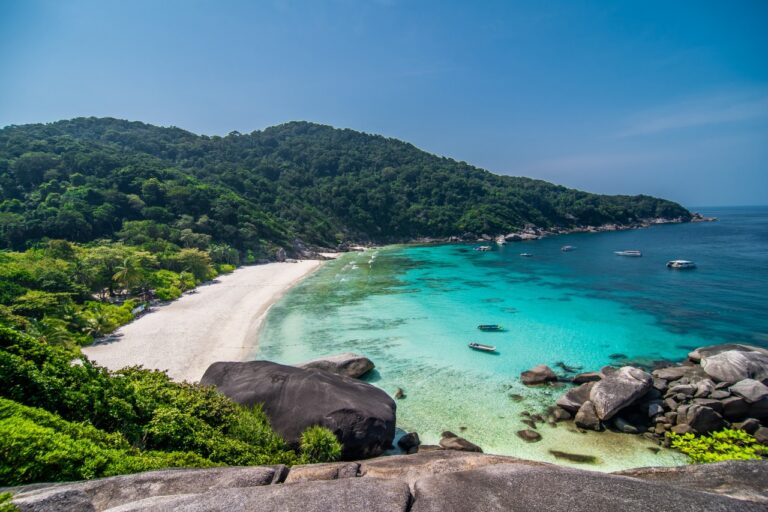
There aren’t huge crowds here like at some popular resorts, but there is white sand, granite boulders, crystal-clear water, and dense forests. The top spots always include Anse Sources d’Argent on La Digue, Anse Lazio and Anse Georgette on Praslin, Bo Vallon on Mahé, as well as the Vallée de Mai Nature Reserve and the Sainte-Anne Marine Park.
Below, you’ll find a detailed breakdown of these places, covering various aspects: how to get there, what to expect, how much admission costs, and why people keep coming back.
La Digue Island and Its Attractions
Let’s start with La Digue—the smallest and most peaceful island, which you can cycle around in a couple of hours. Many people come here for the day from Praslin or Mahé by ferry (20–30 minutes from Praslin), but it’s better to stay overnight: that’s when the beaches empty out, and you can watch the sunset or sunrise in peace.
There are almost no cars here, and people ride bicycles along narrow paths among the palm trees. The main attraction is Anse Source d’Argent Beach. It is located in the southwest and is part of the former L’Union Estate plantation.
To get in, you need to pay an admission fee of 150 Seychelles rupees per adult (about 11–12 USD). For that price, you’ll receive a wristband and can explore the entire grounds all day long.
The beach stretches for nearly two kilometers: soft white sand, shallow, crystal-clear water near the shore, and huge granite boulders that lie right in the water, creating those famous scenes.
The water here is warm, and the entry is gentle, so it’s perfect for visiting with children, swimming, and snorkeling.


A quick tip: It’s best to come in the morning or in the afternoon, when the sun isn’t as bright and there are fewer people.
Near the beach, there’s shade from palm trees, a café, and even a small area with giant tortoises—you can feed them leaves. The plantation grounds feature preserved historic buildings, a copra mill, and gardens, so you’re in for a very enriching walk.
From Anse Sources d’Argent, it’s easy to reach other beaches on foot or by bike. For example, Grand Anse Beach is a wide stretch of golden sand on the east side, where the waves are stronger and the scenery is more rugged.
Nearby are Petite Anse and Anse Cocos—they’re connected by trails through the forest. The water here is clearer, and you can swim in the natural pools among the rocks.
There’s also Anse Marron Beach—a more secluded and hard-to-reach spot, but very beautiful.
Praslin Island and Its Attractions
Next, be sure to visit Praslin—the second-largest island, which is often described as one of the most picturesque. It, too, has many quiet coves and lush greenery.
One of the most popular beaches is Anse Lazio, which regularly ranks among the world’s best thanks to its turquoise waters, gentle slope into the water, shade from palm trees, and granite boulders. The sand here is soft and white, and it’s fun to watch the fish underwater. There are cafes and restaurants nearby serving fresh fish.
You can get there from the main port of Baie-Sainte-Anne by car or taxi in 15–20 minutes.
There’s another beach just as beautiful—Anse Georgette. You can walk there from Anse Lazio (about 20–30 minutes along the trail) or take a boat. Here, the water is even more vibrant, the sand is cleaner, and there are usually fewer people, especially if you arrive early in the morning.


But Praslin isn’t just about beaches. To make the most of your vacation in the Seychelles, be sure to visit the Vallée de Mai Nature Reserve (Vallée de Mai, May Valley). Designated a UNESCO World Heritage Site in 1983, it is an ancient palm forest covering an area of about 19.5 hectares.
The plants here have remained virtually unchanged since prehistoric times. The star attraction is the coco de mer palm, which bears the world’s largest seeds, weighing up to 25–30 kg. The seeds have an unusual shape and were once called “love nuts.”
The forest is home to rare black parrots—endemic to Praslin—as well as chameleons, lizards, and other unique species. The trails are well-marked, with signs and maps.
The nature reserve is open daily from 8:30 a.m. to 4:30 p.m., with last admission at 3:30 p.m. Admission is 450 Seychelles rupees per adult (children under 12 are free). The proceeds go toward nature conservation. A visit takes 1–2 hours, and it’s one of the most peaceful and lush spots around. At the entrance, you’ll receive a free brochure with a map and a list of plants and birds.
From Praslin, it’s easy to take a day trip to the neighboring islets. For example, Curieuse—it’s home to hundreds of giant Aldabra tortoises, mangrove forests, an old planter’s house, and its own beaches.
You can also visit Île Saint-Pierre, an uninhabited island located north of Praslin Island, east of Curieuse Island, at the edge of the Curieuse Marine National Park.
The waters around Saint Pierre Island remain a perennial favorite among swimmers, snorkelers, and sailors, for whom the island is the perfect place to admire a breathtaking Seychelles sunset.


Mahé Island and Its Attractions
Now we’re heading to Mahe Island—the largest island, home to the international airport and the capital, Victoria.
The liveliest beach on the island is Beau Vallon Beach. It’s a long beach with white sand, natural shade from the trees, and a promenade along the shore. There are many hotels, cafes, and water activities here—such as kayaking and windsurfing.
The sunsets are spectacular, and the water is usually calm enough for swimming. The beach is popular with families and those who want to combine relaxation with convenience.
In the southern part of Mahé, you’ll find more secluded beaches, such as Anse Intendance and Anse Takamaka. Here, you’ll find long stretches of sand, green hills, and—at times—strong winds and waves.
The sea at these beaches can be rough, especially during the rainy season, but the scenery is unforgettable. Swim with caution and only when the waves are calm—many beaches have warnings about rip currents. These spots are ideal for those seeking solitude.


The Capital City of Victoria and Its Attractions
It’s a small, cozy town. There aren’t many sights here, so you can see them all in a few hours.
You can start exploring the city at the Sir Selvin Selvin-Clark Market (also known as the Victoria Market). Here you’ll find fresh fish, fruit, spices, and souvenirs. Nearby are the Clock Tower, a Hindu temple, and the botanical garden.
If you love nature, head to Morne Seychellois National Park—the largest national park in the Seychelles. It was established in 1979 to protect a unique ecosystem that includes mangrove swamps, tropical jungles, and mountain forests.
The park features more than 15 kilometers of trails of varying difficulty. Within its boundaries (approximately 3,045 hectares, which accounts for more than 20% of the island of Mahé) grow over 200 plant species, many of which are endemic to the Seychelles. You can also see the ruins of old distilleries, cinnamon workshops, and other historic structures linked to the Seychelles’ colonial past.
Another popular attraction is the Sainte Anne Marine National Park. Established in 1973, it is the first marine national park of its kind in the Indian Ocean. It encompasses six small islands near Victoria—just a 10- to 15-minute boat ride away.

Here you’ll find lush coral reefs, an abundance of fish, turtles, stingrays, and occasional dolphins. You can take a glass-bottom boat tour, go snorkeling, or simply enjoy a leisurely ride. Many tours include stops at Moyenne Island or Cerf Island, where you can have lunch and take a walk. The park is ideal for those who want to explore the underwater world without a long trip.
Many tourists plan their itinerary this way: a few days on Mahé to settle in, explore the city and the national park, then a trip to Praslin for 3–4 days to enjoy the beaches and the forest, and finally, La Digue for complete relaxation.
Ferries run daily: the trip from Mahé to Praslin takes about an hour, and from Praslin to La Digue takes 20–30 minutes. There are also domestic flights on small planes. You can also book exclusive cruises around the Seychelles.
The best time to visit is during the dry season, from May through October: there’s less rain, the sea is calmer, and the waves on the eastern beaches are smaller. The rainy season (November–April) is also an option, but there are short downpours, and some beaches in the south can be dangerous for swimming due to strong currents.