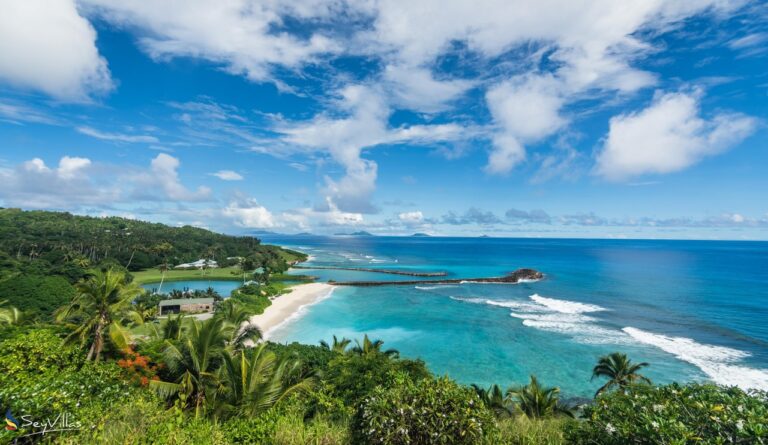


In this article, we’ll address the questions that most often concern travelers planning a vacation in the Seychelles from June through September:
• What is the southeast monsoon in the Seychelles?
• How does it affect rest?
• Is it okay to swim in the ocean this season?
• Which beaches can be dangerous?
• What are the advantages of the summer season?
• Alternative Things to Do in the Seychelles: What to Do on Windy Days?
The southeast monsoon, which blows in the Seychelles from June through September, is not a season of tropical downpours, but a time of dry, pleasant weather and steady winds.
At this time of year, the air becomes noticeably fresher, and the humidity drops to about 70%. The air temperature stays within a pleasant range of about 24–28°C, and the water remains warm—around 26–27°C.
But there are some major changes this season brings, and they have to do with ocean conditions and, as a result, your choice of beach for vacation. In the first section of this article, we’ll take a look at which beaches are suitable for swimming and which ones are best to avoid.
How the Monsoon Is Changing the Map of Beaches
The monsoon has its greatest impact on the southern and southeastern coasts of the islands, which bear the brunt of the wind and ocean waves.
The water here becomes choppy, and seaweed begins to appear on many beaches, especially in open areas. At the same time, the western and northwestern bays are sheltered from the wind, turning into protected and calm harbors that are ideal for swimming and snorkeling.
Therefore, our top recommendation for a comfortable vacation from June through September is to choose beaches on the western and northwestern coasts.

Beau Vallon Beach, located in the northwest of Mahé, is considered one of the most consistent and popular options. It is a wide bay with relatively calm waters, well-developed amenities, restaurants, and water activities. Beau Vallon is perfect for family vacations, swimming, stand-up paddleboarding, catamaran rides, and relaxing in the evening while watching the sunsets.
Another gem of the season is Port Launay Lagoon on the west coast of Mahe. It is perhaps one of the best lagoons for snorkeling on windy days. Thanks to its topography, it’s well protected from waves; the water here is often calm and crystal-clear, and the coral reef is stunningly beautiful. Locals often recommend Port Launay especially during the southeast monsoon season.
Anse Royale Beach, located in the southeastern part of Mahé, is of particular interest. Although it is on the windward side, part of the cove is sheltered by a coral reef, so on some days the water here can remain surprisingly calm, making it ideal for swimming and snorkeling.
However, when planning a trip to this beach, always check the weather forecast, because conditions here during the monsoon season depend heavily on wind strength, tides, and wave direction. One day it might be perfectly calm, while the next could be rough with waves and seaweed.
If you’re planning a vacation in the Seychelles and are considering Eden Island—located on the eastern side of Mahé but within a sheltered marina—it’s best to choose the small inland beaches on the island itself or the nearby sheltered areas for swimming. The waves here are partially broken by breakwaters, and the water is often calmer than on the open eastern beaches.
However, to capture that “perfect postcard shot” and enjoy the best snorkeling, it’s still worth heading to the western side—to Bo-Vallon, Port Luneau, Anse Soleil, or Petite Anse.

Beaches to Avoid
During the monsoon season, some beaches become not only uncomfortable but also dangerous for swimming due to strong waves, powerful rip currents, and surf.
This applies primarily to the open southern and southeastern beaches, such as Anse Intendance and Grand Anse on Mahé, as well as the southern beaches on the island of La Digue.
During the monsoon season, Anse Takamaka Beach also becomes rougher, and its waters are less clear.
But even if you decide to go swimming at safer beaches, always pay attention to the red flags on the beach. If they’re up, it’s best to avoid swimming out to deep water and stick to walking along the shore. And if there are no warning signs, keep an eye on the strength of the waves.
It’s important to remember that many beaches in the Seychelles don’t have lifeguards, so vigilance and common sense are your best allies.
Seasonal Highlights: Snorkeling, Diving, and Water Sports
Paradoxically, during the monsoon season, underwater visibility on the leeward side of the island is often better. In some places, it can reach 20–25 meters.
However, on beaches exposed to the wind, the situation is the opposite: strong currents stir up suspended sand, making the water murky and uncomfortable for observing marine life.
For fans of active water sports, the southeast monsoon is peak season. Steady winds of 15–25 knots create ideal conditions for kitesurfing and windsurfing. It’s also a great time for sailing, though deep-sea fishing depends on the weather: the bite is noticeably slower, but fishing is still possible—especially if you’re with the Boombastic team.
For regular boat trips, the sea can sometimes be rough, especially when traveling between islands. Those prone to seasickness should plan their trips for the morning, choose calm days, or stock up on special remedies in advance.

Weather and Safety: What to Expect and How to Prepare
From June through September is also the time when there are fewer tourists in the Seychelles, and room rates at some hotels are more attractive than during the high season.
By the way, with Boombastic Tours, you can easily book the best hotels and villas in the Seychelles, which we’ve handpicked especially for our guests.
The northern coves of Praslin, the western lagoons of Mahé, and secluded, wind-sheltered beaches are the highlights of this season. At Anse Lazio Beach, located on the island of Praslin, the water is usually crystal clear in the summer, offering excellent conditions for snorkeling.
It is important to note that the Seychelles lie outside the main cyclone belt of the Indian Ocean. Therefore, the problem is usually not the storms themselves, but rather the strong surf, cross-currents, and surge near the shore, which can be dangerous.
For a comfortable and safe day at the beach during the monsoon season, it’s a good idea to follow a few simple tips:
• It’s best to plan your trip to the beach for the morning, before the wind picks up.
• Choose the sheltered side of the island.
• It’s a good idea to bring an umbrella or a beach tent, reef shoes to protect your feet from sharp rocks and coral, and a mask and snorkel for snorkeling.

Alternative Activities: Things to Do on Windy Days
In the summer in the Seychelles, when it’s windy on some beaches, you can enjoy other activities in great comfort. Thanks to the dry and not-too-hot weather, this is a wonderful time to try hiking in the Seychelles.
Explore scenic trails such as Anse Major and Morne Blanc, or go hiking in the rainforest. Spa treatments, visits to Creole restaurants, and trips to the markets are also excellent options.
You can arrange a private boat tour to the protected lagoons or go fishing, and a sunset cruise along the western side of the island is perfect for a romantic evening.
To make your vacation as comfortable as possible, it’s a good idea to arrange in advance for a private transfer that includes beach gear (sun loungers, an umbrella), a cooler for drinks, and even lunch delivery or a barbecue right on the beach.
Our team can take care of all of this for you. Please contact us, and we’ll be happy to help you.